Red Tassle Bunting SVG Clipart
A Designer’s First Look: Playful, Festive, and Just Right for Handmade Charm
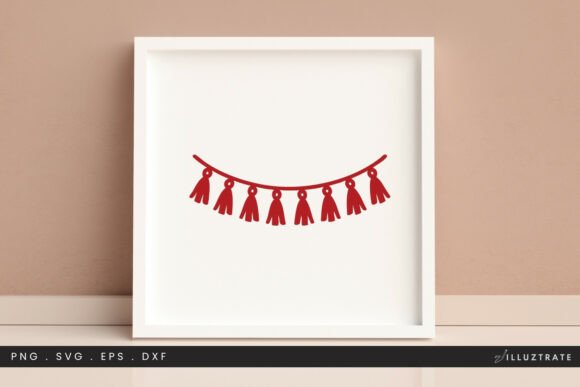
When I opened Red Tassle Bunting SVG Clipart, my immediate thought wasn’t “cute” — it was “usable.” That’s rare. So many bunting designs lean too delicate or too cluttered, but this one balances whimsy with clean structure. The tassels have weight and rhythm, the spacing between flags feels intentional (not cramped or awkward), and the overall silhouette reads clearly at small sizes — a huge win for embroidery. It doesn’t scream “clipart”; it whispers “hand-stitched detail,” even before a single thread is laid down. As a designer who regularly sources graphics for client embroidery projects, I appreciate how this design carries its own personality without demanding heavy editing.
Where It Shines: Real Projects, Real Stitching
I tested Red Tassle Bunting SVG Clipart as the focal motif on a custom embroidered cotton tote bag for a local boutique’s spring launch. The result? Instant warmth and approachability. Customers paused at the display — not because it was flashy, but because it felt *inviting*. That’s the power of thoughtful bunting: it signals celebration, care, and handmade intention. It worked beautifully on mid-weight canvas, especially when paired with a soft satin stitch for the tassels and a clean fill stitch for the flags. I also ran it as a subtle chest accent on a lightweight sweatshirt for a baby gift line — scaled down to 3.5 inches wide — and the proportions held up without losing legibility.
For Etsy sellers and small shop owners, this design slots neatly into several high-demand categories: nursery decor (think pillow covers and tea towels), holiday embroidery (perfect for Easter baskets or summer picnic blankets), and personalized gifts like aprons or kitchen towels. It’s equally at home on an embroidered patch meant for a denim jacket or stitched directly onto a linen cap. Because the layout is horizontal and open, it avoids the crowding issues common in dense quote-based designs — making it far more forgiving across fabric types and hoop sizes.
Where to Pause — Not Every Fabric or Use Case Is Equal
That said, Red Tassle Bunting SVG Clipart isn’t magic. On highly textured fabrics — like thick terry cloth or bouclé knits — the fine tassel details can blur unless you adjust stitch density and use a medium-cutaway stabilizer. On thin or stretchy fabrics (think lightweight rayon blends or baby rib knit), skip direct stitching and go for applique instead: cut the flags from contrasting fabric, then secure with satin stitch edging. And if you’re planning to embroider it on dark fabric, test thread color contrast first — red-on-black can read flat without careful tonal layering or a subtle underlay.
It’s also worth noting: while the design scales well, avoid shrinking it below 2.25 inches wide for apparel. Tiny tassels lose definition, and running stitches may not register cleanly on low-density machines. Curved surfaces — like the front of a structured cap — require repositioning or slight distortion compensation in your embroidery software. Don’t force it; let the shape breathe.
What This Design Adds to Your Finished Product
Customers don’t buy bunting — they buy feeling. Red Tassle Bunting SVG Clipart adds handmade credibility, seasonal relevance, and visual softness to otherwise utilitarian items. A plain tea towel becomes a gift. A basic tote becomes boutique-worthy. That shift matters — especially for craft businesses where perceived value drives pricing and repeat orders. When used thoughtfully, it strengthens brand consistency (think warm, joyful, detail-oriented) and boosts buyer engagement: people photograph it, tag your shop, and remember the tactile charm of the tassels.
But here’s what it doesn’t do: replace craftsmanship. Its success hinges on your execution — proper hooping, appropriate stabilizer choice, and smart thread selection. A rushed stitch-out on unstable fabric will undermine even the best machine embroidery design. So treat it like a collaborator, not a shortcut.
Practical Notes Every Embroidery Designer Should Check
- Test first — Always run Red Tassle Bunting SVG Clipart on scrap fabric matching your final project’s weight and weave.
- Review stitch density — Especially in the tassel clusters. Overly dense fills can pucker thin fabrics; overly sparse ones won’t hold shape.
- Confirm hoop size compatibility — Measure the widest point of the design against your most-used hoops before digitizing or converting.
- Inspect small details — Zoom in on vector paths. Are anchor points clean? Are corners sharp enough for crisp satin stitching?
- Mock it up in black and white — Does the contrast hold? If you’re selling digital embroidery files, buyers need clarity at a glance.
- Compare light vs. dark backgrounds — Try it over cream, navy, and charcoal mockups to assess versatility for your product line.
- Verify licensing — Since this is listed as a Graphics asset in the Crafts category, confirm whether commercial use (e.g., selling finished embroidered patches or digital bundles) is permitted before scaling production.
Final Thought: A Quiet Workhorse, Not a One-Season Flash
Red Tassle Bunting SVG Clipart won’t dominate your portfolio — and that’s its strength. It’s the kind of embroidery file that supports your voice instead of shouting over it. Whether you’re building a cohesive line of nursery goods, refreshing holiday merchandise, or adding subtle flair to everyday apparel, it delivers consistent, stitch-ready charm. It respects the craft. It respects the customer. And it respects your time — no endless tweaking, no surprise glitches in the vector paths. For designers, Etsy sellers, and small shop owners who value reliability over novelty, this is one of those quiet, confident assets that earns its place in your design library — and on your next finished product.